Please enter the password to access the project
Buttercookies
Buttercookies
Buttercookies
Buttercookies
Made for
Made for
Made for
Cubyts Technologies
Cubyts Technologies
Cubyts Technologies
Cubyts Technologies
Year
Year
Year
2023-25
2023-25
2023-25
2023-25
Owned and evolved Buttercookies, Cubyts' internal design system, enabling consistent UI patterns for an AI-driven platform and significantly reducing feature delivery cycle time.
Owned and evolved Buttercookies, Cubyts' internal design system, enabling consistent UI patterns for an AI-driven platform and significantly reducing feature delivery cycle time.
Owned and evolved Buttercookies, Cubyts' internal design system, enabling consistent UI patterns for an AI-driven platform and significantly reducing feature delivery cycle time.
Overview
Overview
Overview
Overview
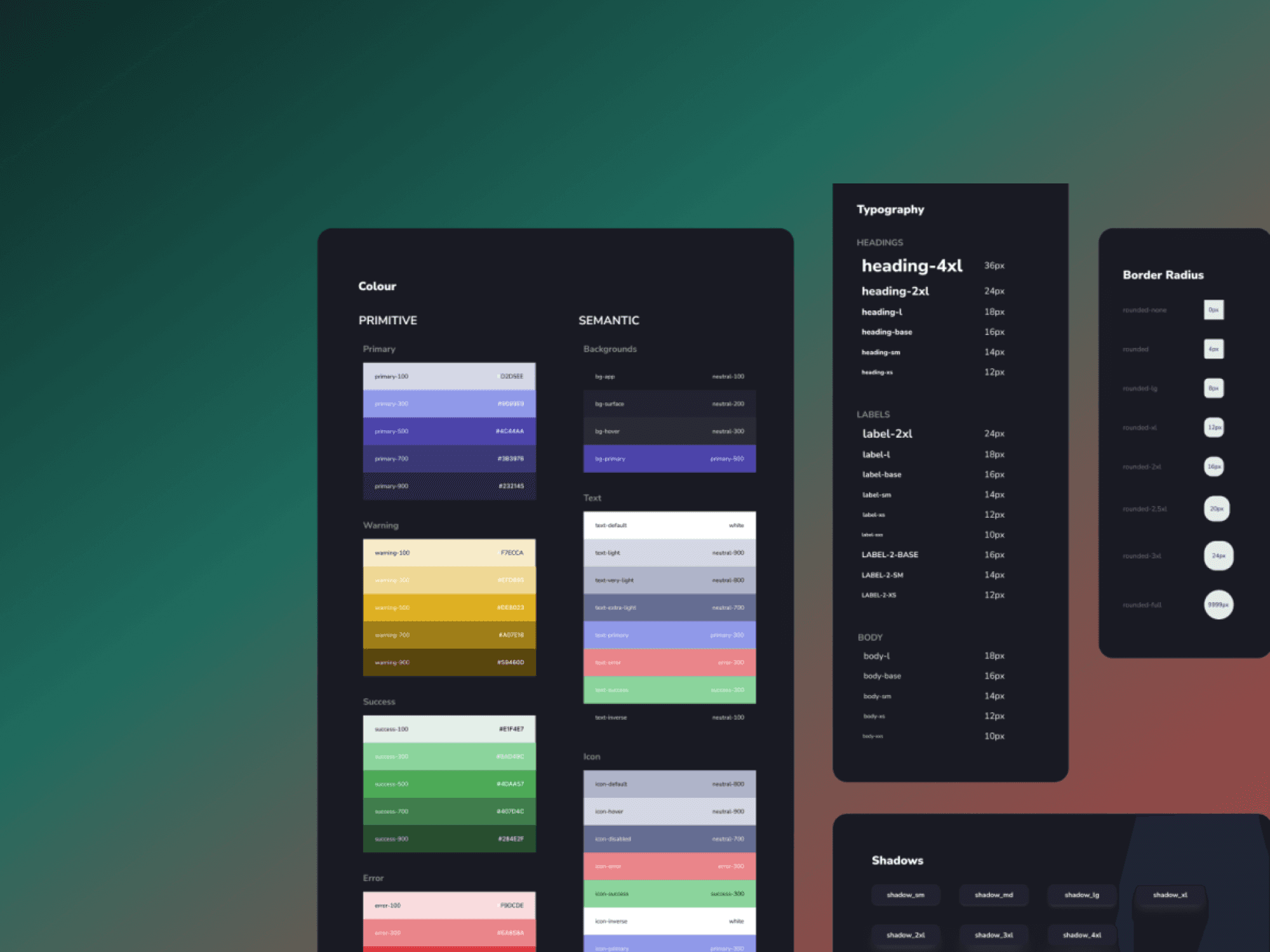
Buttercookies is the design system I built and maintained as the sole designer at Cubyts. More than a component library, it was the backbone that gave a fast-moving, AI-native product its visual consistency, scalability, and development speed. As the platform evolved rapidly through four release cycles, Buttercookies evolved with it, adapting to new product requirements including dark mode, generative AI features, and enterprise-grade UI complexity.
Buttercookies is the design system I built and maintained as the sole designer at Cubyts. More than a component library, it was the backbone that gave a fast-moving, AI-native product its visual consistency, scalability, and development speed. As the platform evolved rapidly through four release cycles, Buttercookies evolved with it, adapting to new product requirements including dark mode, generative AI features, and enterprise-grade UI complexity.
Buttercookies is the design system I built and maintained as the sole designer at Cubyts. More than a component library, it was the backbone that gave a fast-moving, AI-native product its visual consistency, scalability, and development speed. As the platform evolved rapidly through four release cycles, Buttercookies evolved with it, adapting to new product requirements including dark mode, generative AI features, and enterprise-grade UI complexity.
Buttercookies is the design system I built and maintained as the sole designer at Cubyts. More than a component library, it was the backbone that gave a fast-moving, AI-native product its visual consistency, scalability, and development speed. As the platform evolved rapidly through four release cycles, Buttercookies evolved with it, adapting to new product requirements including dark mode, generative AI features, and enterprise-grade UI complexity.
Made for
Made for
Made for
Made for
Cubyts Technologies
Cubyts Technologies
Cubyts Technologies
Cubyts Technologies
Industry
Industry
Industry
Industry
B2B SAAS
B2B SAAS
B2B SAAS
B2B SAAS
Context
Context
Context
Context
Design System
Design System
Design System
Design System
Design Tokens
Design Tokens
Design Tokens
Design Tokens
Atomic Design
Atomic Design
Atomic Design
Atomic Design
Content
Content
Content
Content
Duration
Duration
Duration
Duration
2 Years
2 Years
2 Years
2 Years


The Challenge
The Challenge
The Challenge
The Challenge
Building a design system as a solo designer for a platform that was simultaneously being defined, built, and shipped is no small task. The platform was AI-driven and data-heavy, requiring UI patterns that could gracefully handle dynamic, generative content, something most standard design systems are not built for. Without a robust system in place, design and development risked becoming a bottleneck at every release cycle. The additional challenge was ensuring that design decisions translated into development accurately and efficiently, with minimal interpretation gaps between the two functions.
Building a design system as a solo designer for a platform that was simultaneously being defined, built, and shipped is no small task. The platform was AI-driven and data-heavy, requiring UI patterns that could gracefully handle dynamic, generative content, something most standard design systems are not built for. Without a robust system in place, design and development risked becoming a bottleneck at every release cycle. The additional challenge was ensuring that design decisions translated into development accurately and efficiently, with minimal interpretation gaps between the two functions.
Building a design system as a solo designer for a platform that was simultaneously being defined, built, and shipped is no small task. The platform was AI-driven and data-heavy, requiring UI patterns that could gracefully handle dynamic, generative content, something most standard design systems are not built for. Without a robust system in place, design and development risked becoming a bottleneck at every release cycle. The additional challenge was ensuring that design decisions translated into development accurately and efficiently, with minimal interpretation gaps between the two functions.
Building a design system as a solo designer for a platform that was simultaneously being defined, built, and shipped is no small task. The platform was AI-driven and data-heavy, requiring UI patterns that could gracefully handle dynamic, generative content, something most standard design systems are not built for. Without a robust system in place, design and development risked becoming a bottleneck at every release cycle. The additional challenge was ensuring that design decisions translated into development accurately and efficiently, with minimal interpretation gaps between the two functions.
The Solution
The Solution
The Solution
The Solution
Buttercookies was built on atomic design principles, structuring the system from the ground up through tokens, atoms, molecules, organisms, and templates. This hierarchy made the system scalable and easy to extend as new features were added. A deliberate token naming convention formed the foundation, ensuring that every design decision had a direct, unambiguous counterpart in code. This made developer handoff significantly cleaner, with engineers working from a predictable, well-documented system rather than interpreting design files. The system was purpose-built to support the specific demands of an AI-native platform, with component patterns flexible enough to accommodate dynamic and generative UI states. When the platform expanded to dark mode and later incorporated GenAI-driven interfaces, Buttercookies absorbed those changes without disrupting the existing library. It was treated as a living product, continuously groomed and refined in step with the platform.
Buttercookies was built on atomic design principles, structuring the system from the ground up through tokens, atoms, molecules, organisms, and templates. This hierarchy made the system scalable and easy to extend as new features were added. A deliberate token naming convention formed the foundation, ensuring that every design decision had a direct, unambiguous counterpart in code. This made developer handoff significantly cleaner, with engineers working from a predictable, well-documented system rather than interpreting design files. The system was purpose-built to support the specific demands of an AI-native platform, with component patterns flexible enough to accommodate dynamic and generative UI states. When the platform expanded to dark mode and later incorporated GenAI-driven interfaces, Buttercookies absorbed those changes without disrupting the existing library. It was treated as a living product, continuously groomed and refined in step with the platform.
Buttercookies was built on atomic design principles, structuring the system from the ground up through tokens, atoms, molecules, organisms, and templates. This hierarchy made the system scalable and easy to extend as new features were added. A deliberate token naming convention formed the foundation, ensuring that every design decision had a direct, unambiguous counterpart in code. This made developer handoff significantly cleaner, with engineers working from a predictable, well-documented system rather than interpreting design files. The system was purpose-built to support the specific demands of an AI-native platform, with component patterns flexible enough to accommodate dynamic and generative UI states. When the platform expanded to dark mode and later incorporated GenAI-driven interfaces, Buttercookies absorbed those changes without disrupting the existing library. It was treated as a living product, continuously groomed and refined in step with the platform.
Buttercookies was built on atomic design principles, structuring the system from the ground up through tokens, atoms, molecules, organisms, and templates. This hierarchy made the system scalable and easy to extend as new features were added. A deliberate token naming convention formed the foundation, ensuring that every design decision had a direct, unambiguous counterpart in code. This made developer handoff significantly cleaner, with engineers working from a predictable, well-documented system rather than interpreting design files. The system was purpose-built to support the specific demands of an AI-native platform, with component patterns flexible enough to accommodate dynamic and generative UI states. When the platform expanded to dark mode and later incorporated GenAI-driven interfaces, Buttercookies absorbed those changes without disrupting the existing library. It was treated as a living product, continuously groomed and refined in step with the platform.
The Result
The Result
The Result
The Result
Buttercookies directly improved design-engineering collaboration and significantly reduced feature delivery cycle time at Cubyts. Handoffs became faster and more accurate, cutting down rework and back-and-forth between design and development. The consistency and scalability of the system was a key enabler in taking the platform from a two-customer MVP to an enterprise-ready product within a single year.
Buttercookies directly improved design-engineering collaboration and significantly reduced feature delivery cycle time at Cubyts. Handoffs became faster and more accurate, cutting down rework and back-and-forth between design and development. The consistency and scalability of the system was a key enabler in taking the platform from a two-customer MVP to an enterprise-ready product within a single year.
Buttercookies directly improved design-engineering collaboration and significantly reduced feature delivery cycle time at Cubyts. Handoffs became faster and more accurate, cutting down rework and back-and-forth between design and development. The consistency and scalability of the system was a key enabler in taking the platform from a two-customer MVP to an enterprise-ready product within a single year.
Buttercookies directly improved design-engineering collaboration and significantly reduced feature delivery cycle time at Cubyts. Handoffs became faster and more accurate, cutting down rework and back-and-forth between design and development. The consistency and scalability of the system was a key enabler in taking the platform from a two-customer MVP to an enterprise-ready product within a single year.
PORTFOLIO
PORTFOLIO
CHECK OUT SOME MORE
CHECK OUT SOME MORE
CHECK OUT SOME MORE
CHECK OUT SOME MORE
Bayer x Parsons
Bayer x Parsons
Bayer x Parsons
Strategic Design
System Design
UX research
Cross-Functional Collaboration

AI Tech Debt Platform
AI Tech Debt Platform
AI Tech Debt Platform
System Design
MVP to Scale
Product Design
Agentic AI
Modular Development
Build with me
Build with me
Build with me
Open to internships, full-time roles, and meaningful collaborations
Open to internships, full-time roles, and meaningful collaborations
Open to internships, full-time roles, and meaningful collaborations
.